As mentioned in our previous article, “The Lomati Hydroelectric Power Plant Flood Recovery”, MBB is involved in the Operation and Maintenance of a Hydroelectric Power Plant in the Lomati River just downstream of Driekoppies Dam. The project is located on the Northern border between South Africa and Eswatini.
The power plant started operating in the 1980s and ran for about 35 years. Due to a combination of factors, it was eventually shut down and left unused, with much of it destined to be sold as scrap metal. MBB was later introduced to the plant by a family member of the late Montie Schoeman, an agricultural engineer who is credited with building the plant.
MBB has been operating the plant since January 2022. The work began with refurbishing the facility and later expanded to include its operation and maintenance. The plant now supplies renewable energy to the distribution network on the farms where it is located.
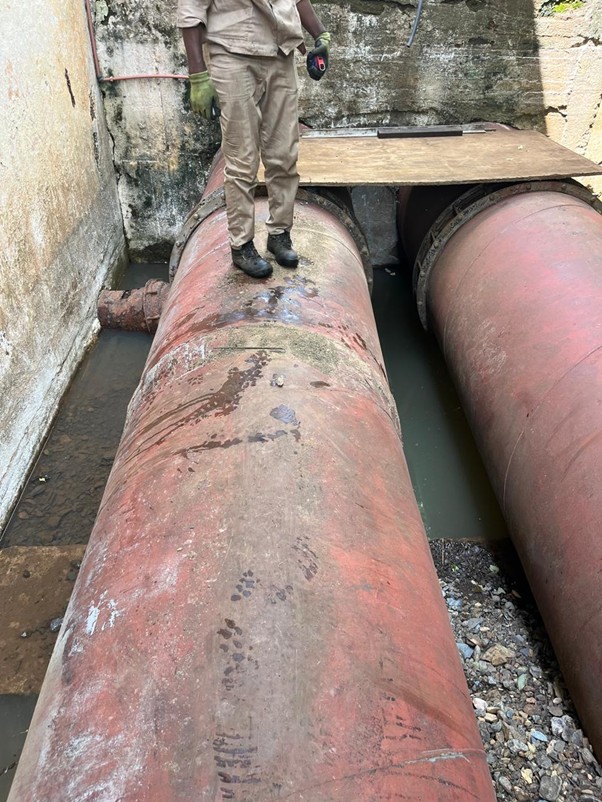
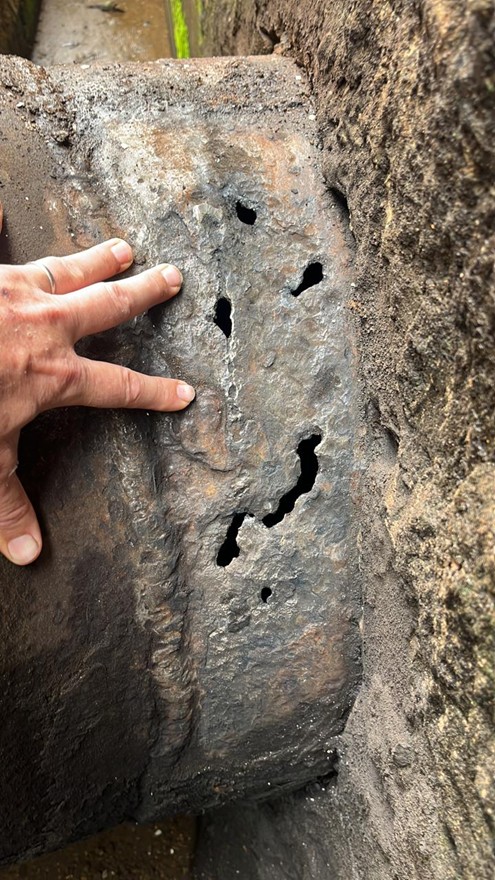
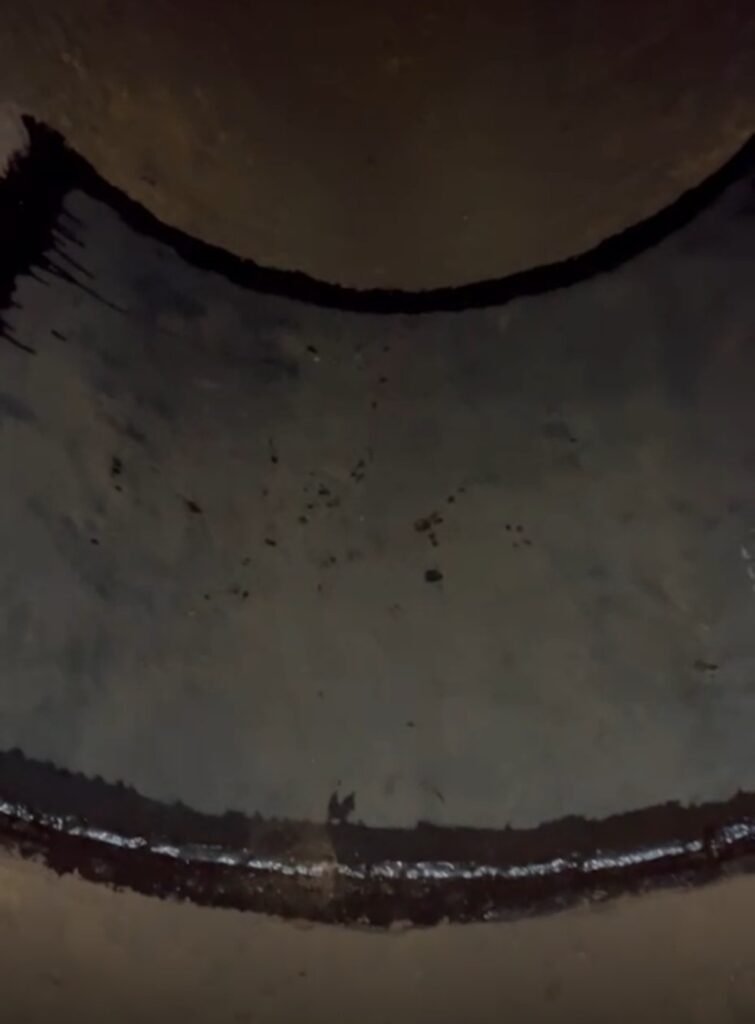
A major and growing concern for the project is the age and condition of the two pipelines that carry water from the canal to the power plant. Some sections have corroded and become extremely thin.
The turbines operate at a relatively low pressure of 17–18 m with a flow rate of about 3 m³/s. Normally, these conditions would not pose a serious water hammer risk. However, due to the combination of old pipelines and high flow rate, the resulting pressure spikes during power interruptions are damaging the pipelines.
The pipelines were originally built without surge protection. MBB is now exploring pressure-relief solutions to reduce the risk and impact of this damage.
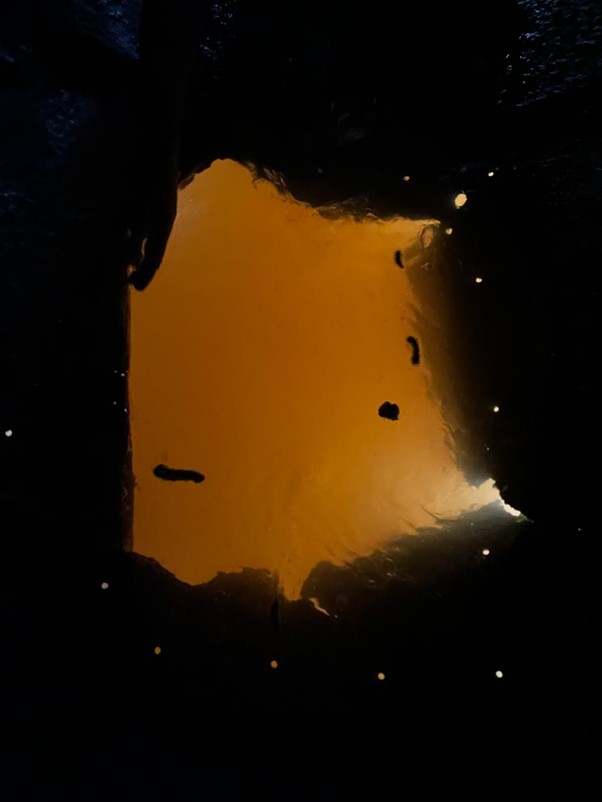
During the December festive period, a surge caused a major pipe failure right next to the plant building. Even though the water pressure in the pipeline was relatively low, the leak produced a surprisingly strong flow. The plant was switched off in January due to flooding. This allowed the canal to be closed and the damaged pipe repaired.
Methods employed to repair the pipelines
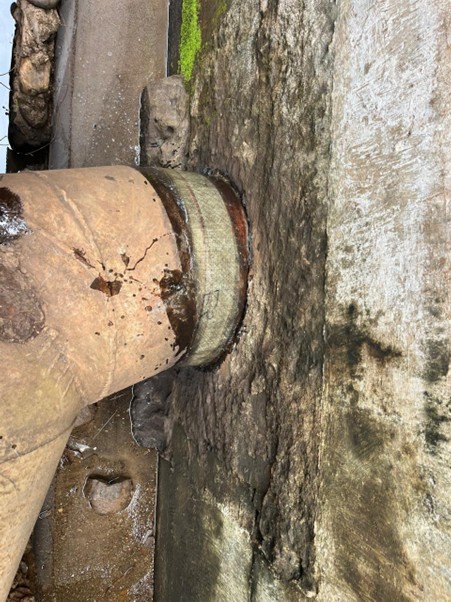
Small leaks in the pipeline are usually closed very effectively using fibreglass patching. This method is employed in sections of the pipeline where the wall thickness is too thin for welding.
In the most recent repair, the upper part of the pipe was thick enough for a low-current welding repair, where a square piece of steel was welded in to close the hole.
Thanks to these repairs, downtime was minimised, and the plant is now back in operation.