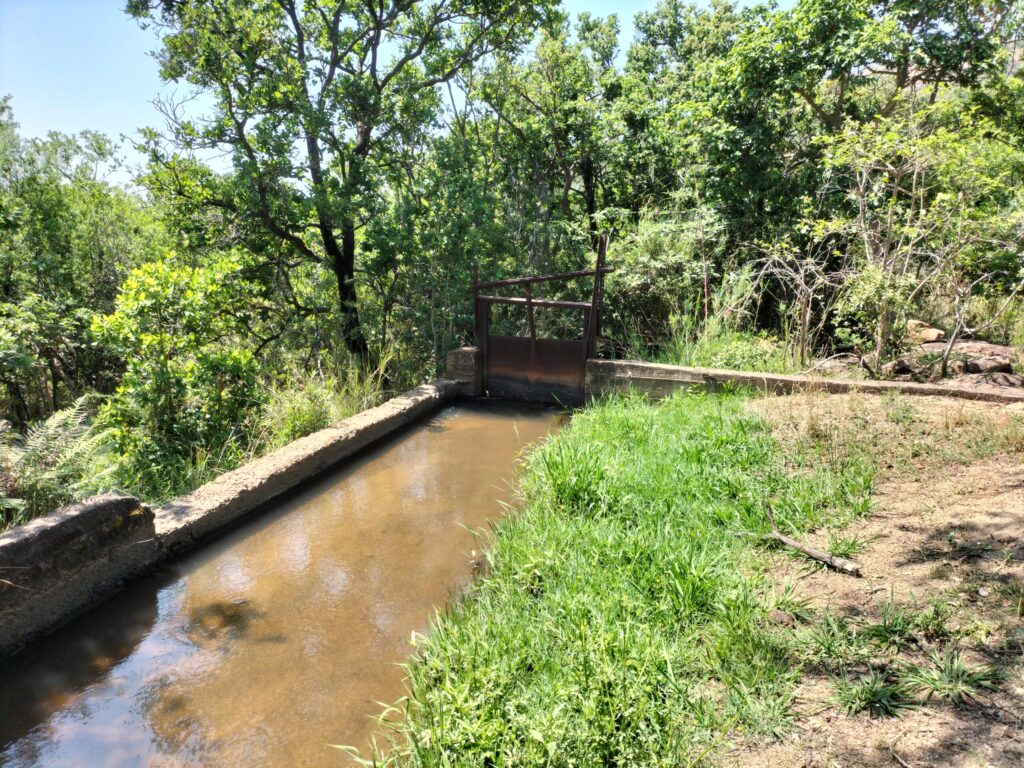
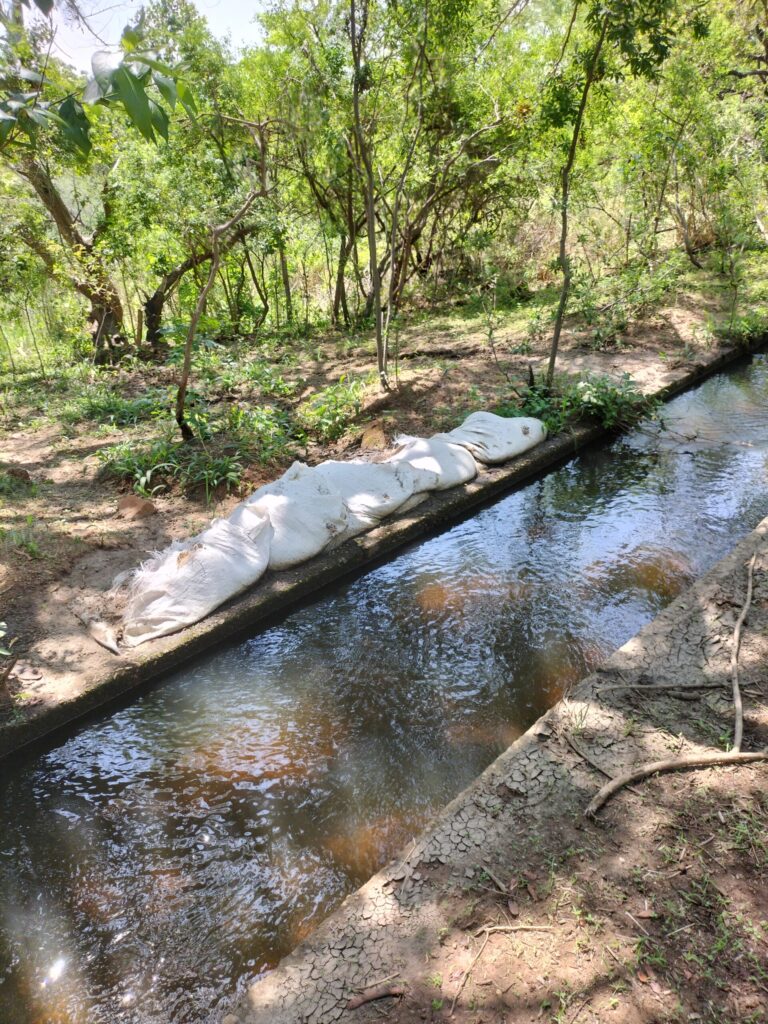
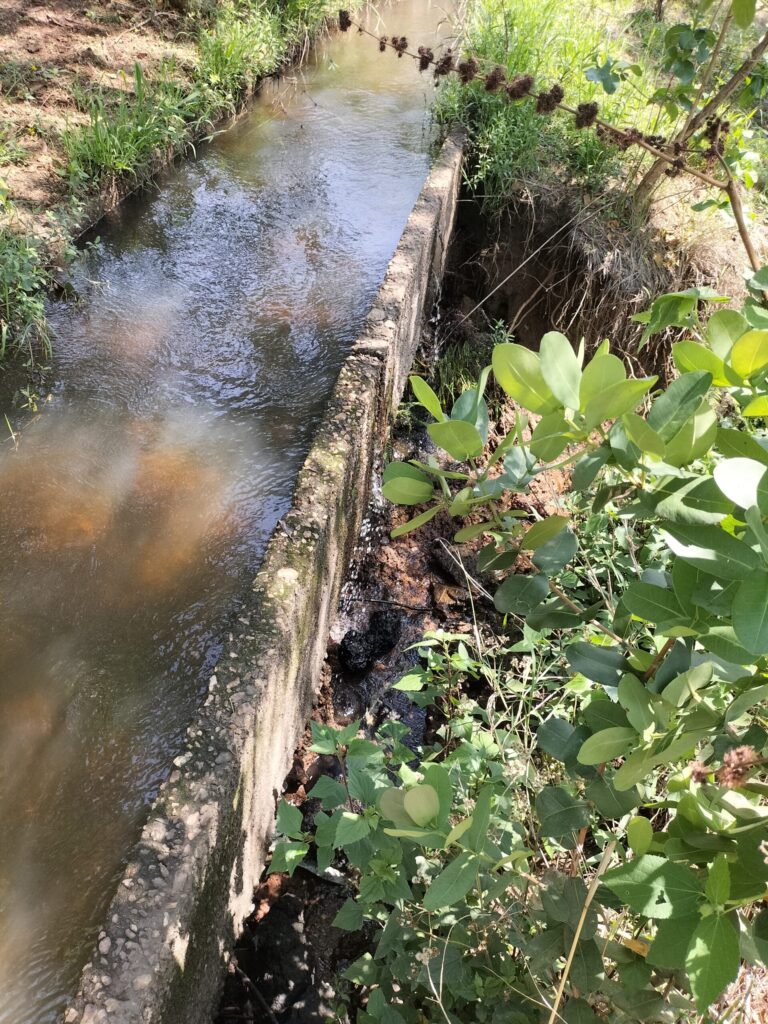
Recently, MBB was appointed by HelloChoice to conduct an investigation into the irrigation canal supplying water to local farmers of the Nhlazatshe Irrigation Scheme located near eManzana in Mpumalanga.
HelloChoice, in partnership with Standard Bank, provides financial facilitation, market-access solutions, and infrastructure support to emerging and small-scale farmers. Through initiatives such as the OneFarm Share programme, HelloChoice helps strengthen agricultural value chains by improving farm productivity, stabilising supply, and enabling targeted investment in critical rural infrastructure.
The Timbali Technology Incubator (Timbali) played a coordinating role in linking MBB with the affected growers. Their field team provided local contextual information, arranged site access, and facilitated engagement with water users during the inspection process. This collaboration ensured that both the operational challenges and user-level priorities were incorporated into the assessment.
The overall canal system has a total length of 11 km and currently serves an unverified enlistment area. The canal comprises mostly an unlined open-channel, rectangular/trapezoidal-shaped profile, save for a ±640 m long reach of concrete-lined rectangular-shaped profile in its upper reach and a ±55 m piped section traversing a watercourse.
The primary objective of this investigation was to assess the current condition of the canal infrastructure and provide a structured evaluation of the necessary repairs, refurbishments, and upgrades necessary to improve its supply capacity.
Methodology
The methodology used to complete this assessment is shown below.
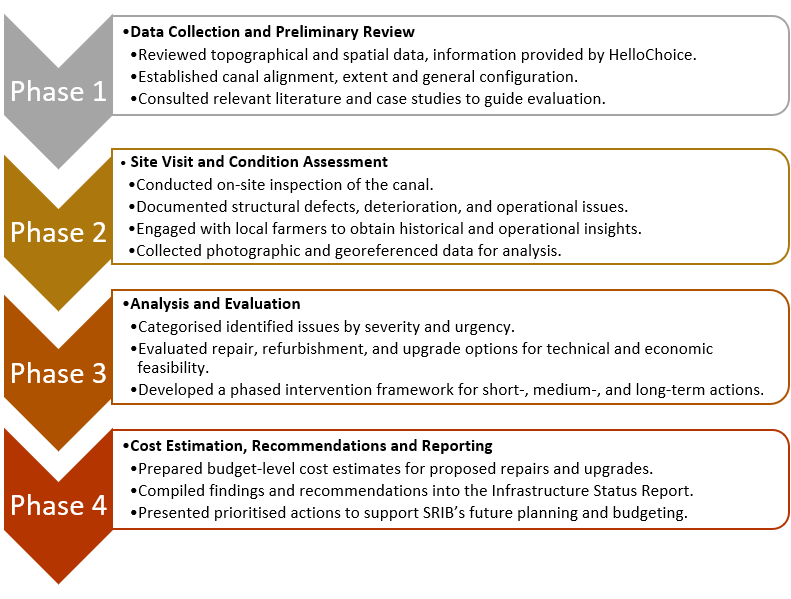
Results
The canal was found to be generally in a poor condition, with several critical structural risks that require attention to avoid progressive collapse, major water losses, and complete failure of supply to downstream users. The major issues include the following: panel collapses, undermining of canal foundations, overtopping, sediment deposition, erosion, tree encroachment and many others.
These issues were classified according to their relative severity and the expected timeframe for required intervention.
- Critical – Defects requiring immediate action to prevent imminent failure, major structural damage, or loss of service.
- High – Defects expected to deteriorate rapidly or significantly impair conveyance efficiency within the short term (1–2 years) if not addressed.
- Medium – Defects that presently allow continued operation but may escalate over the medium term (3–5 years).
- Low – Minor defects or general maintenance items that do not materially affect current performance but should be resolved during routine maintenance to prevent future escalation.
Based on the condition assessment, the required interventions were grouped into four implementation phases according to severity, structural risk and importance to maintaining uninterrupted water delivery to the Nhlazatshe Irrigation Scheme. High-level planning figures were presented in the final report that are suitable for budgeting and prioritisation.
MBB appreciates the opportunity to support HelloChoice, Timbali, and the Nhlazatshe farming community in this important initiative. We look forward to collaborating further with the project team on the planning, detailed design, procurement, and implementation of the proposed works, as well as on any future projects aimed at strengthening the region’s agricultural support infrastructure.