

Continuity of fish passage across hydropower infrastructure is important to the maintenance of genetic diversity and the integrity of fish populations in rivers on which hydropower plants are constructed. This is a subject in which ACER (Africa) Environmental Consultants (ACER) has played a central role during the planning, design, and operation of run-of-river hydropower plants in Central and Southern Africa, sometimes with far reaching outcomes.
The Kikagati Hydropower Plant (HPP) in Uganda, owned and operated by the Kikagati Power Company (KPC), straddles the Kagera River, which forms the international border between Uganda and Tanzania. The HPP comprises a 230m long and 9m high weir across the Kagera River, which gave rise to fish passage and population connectivity concerns from the outset. This was mainly related to Labeo victorianus, a species endemic to the Lake Victoria basin and, at the time, classified by the IUCN as critically endangered. During planning and design, fish movement across the HPP was addressed by means of a traditional fishway as well as an aquatic bypass, the latter to also accommodate the movement of larger animals such as hippos and crocodiles. Both passages were designed and built to exacting specifications, with the meandering aquatic bypass providing different habitat types and resting areas for migrating fish. Nevertheless, concerns remained which led KPC to implement a fish monitoring program up- and down- stream of the HPP.
ACER played a key role in developing and implementing the long-term fish monitoring programme, which was designed to determine whether migratory fish can continue to move successfully up- and down-stream across the HPP, with focus initially given to the migratory Labeo victorianus. After the initialising the monitoring programme, ACER’s work included developing and refining monitoring approaches and methods, testing and adapting specialised fish traps, testing alternate sampling locations (due to turbulent waters), investigating downstream turbine passage, evaluating the effectiveness of the fishway and aquatic bypass, training and supporting the local field monitoring team, and coordinating data collection, data analysis and reporting. Data were also collected on several physical parameters, including water-quality and river-flow metrics, which aided in interpreting the monitoring results.
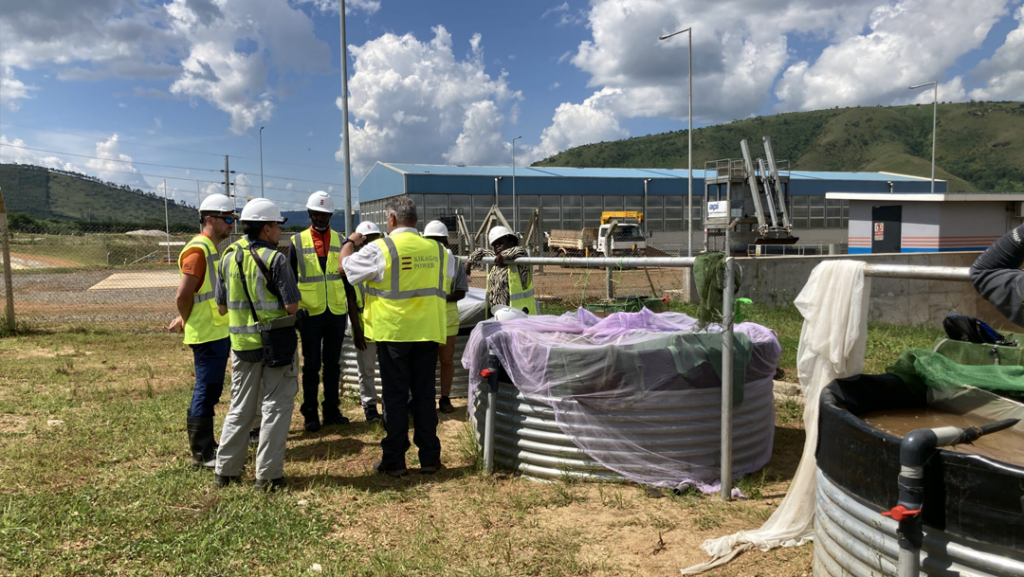
Further, a dedicated fish holding facility was established to assess both immediate and delayed fish mortality following passage through the turbines, including during turbine trip events. While fish mortality did occur, numbers were low and statistically insignificant.
Given the relative abundance of Labeo victorianus, a basin-wide sampling effort was undertaken to establish the geographic distribution and genetic diversity of this species. While this study proved statically inconclusive concerning genetic diversity, it did confirm the abundance and geographic distribution of Labeo victorianus, which subsequently, has been reclassified by the IUCN as least concern.
In a separate analysis of the passage of fish across HPPs, during preliminary investigations for a proposed HPP in Angola, to be located at a naturally occurring drop in river elevation, ACER undertook studies on the swimming abilities of different fish species to understand whether the elevation difference, in low and high flows, presented a physical barrier to the movement of identified indigenous fish. While the study focussed primarily on upstream fish movements, it also considered downstream fish passage during low flows. The study concluded that the elevation difference, at different river flows, presented a natural physical barrier to the migration of fish and that a fishway or aquatic bypass were not required for a future HPP.
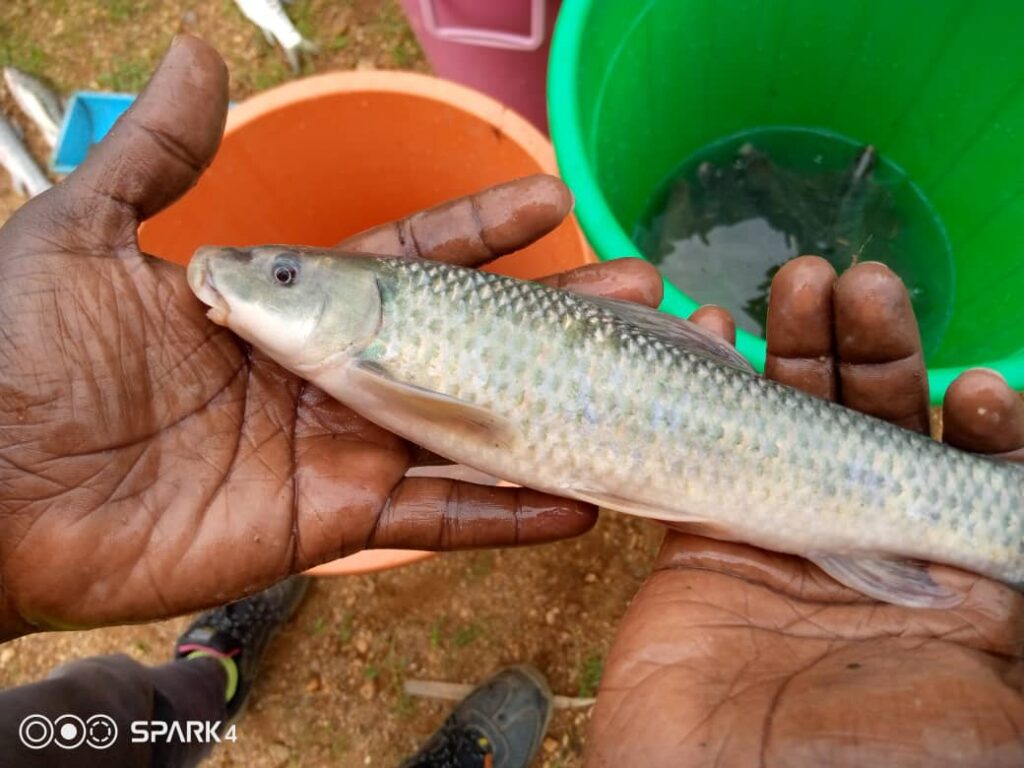
Labeo Victorianus

Sampling the fishway for upstream migration

Aquatic bypass simulating a natural fishway
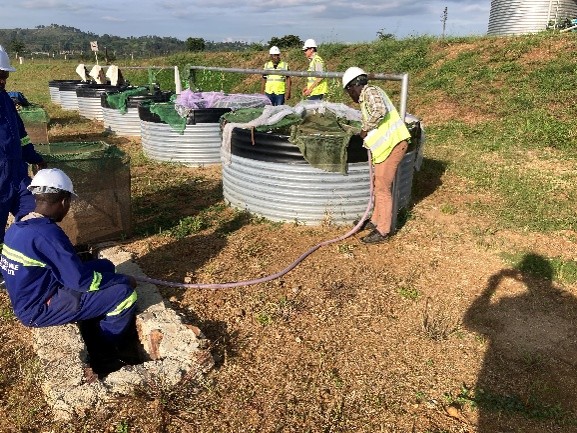
Holding facility to check mortality
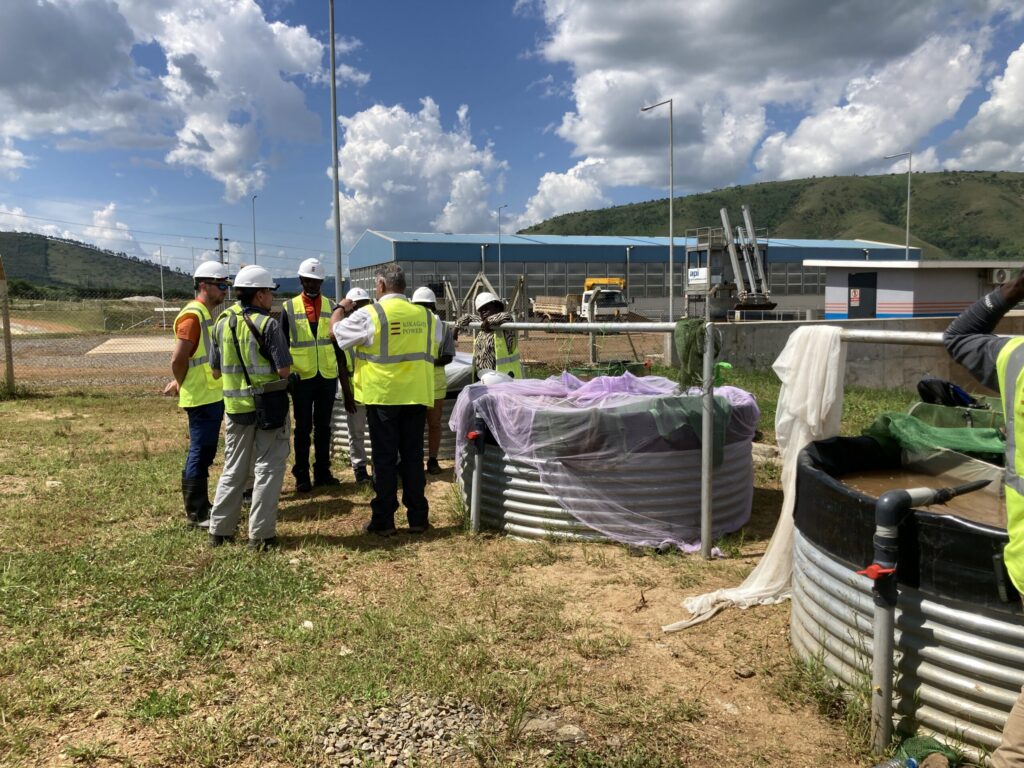
Holding facility to check mortality
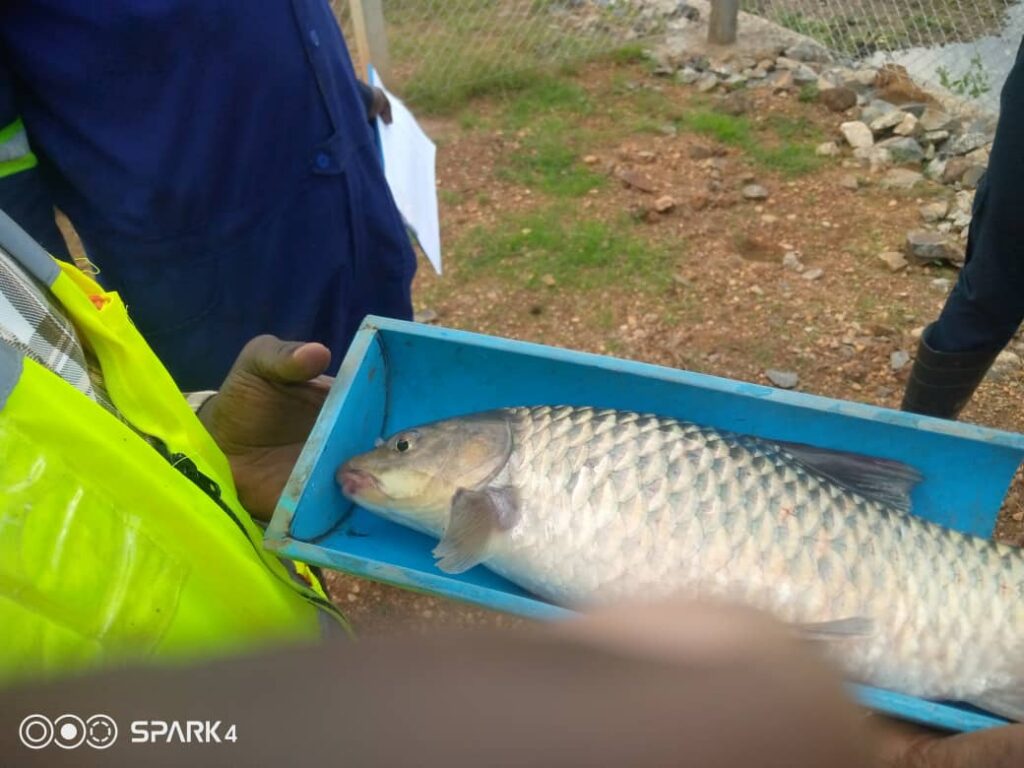
Measuring of fish lengths for all fish caught
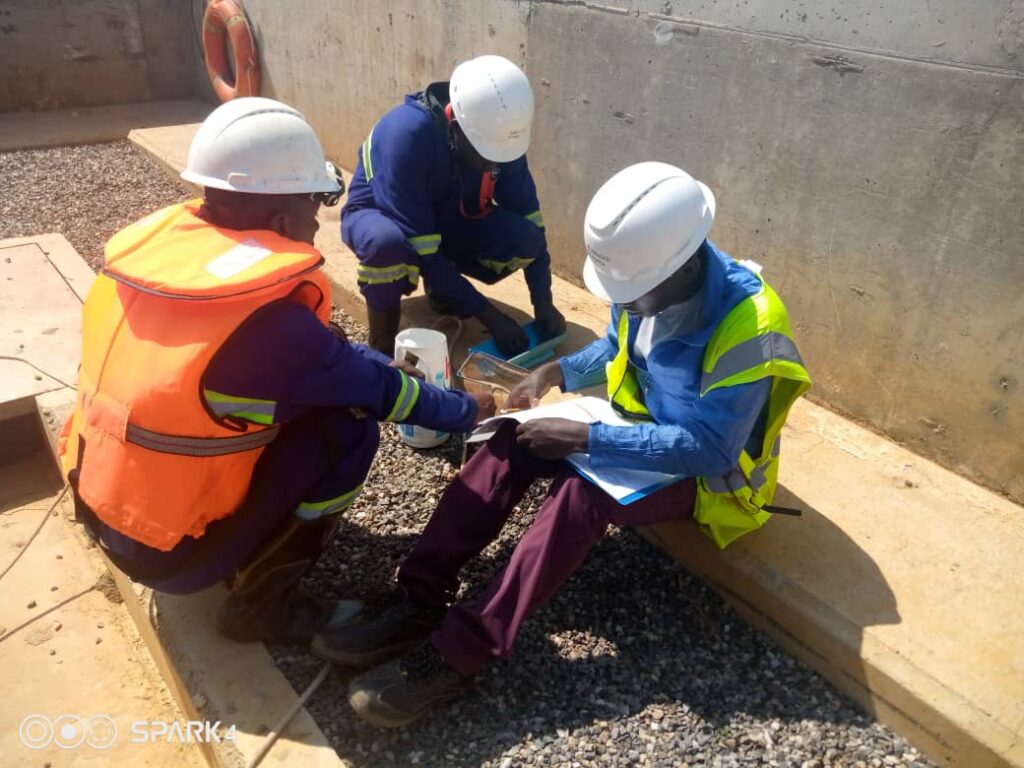
Sampling and recording of fish species and lengths


